

Key Takeaways
- Small observations reveal big insights: Even tiny phenomena, like a few saltwater droplets on a tablecloth, can illustrate fundamental chemical principles such as deliquescence and surface tension.
- Surface chemistry governs real-world behavior: Dissolved salts increase water’s surface tension, preventing absorption into fabrics and affecting interactions with materials — a principle relevant from everyday life to industrial applications.
Context:
While enjoying a morning coffee overlooking the Cauca River valley, an observation of unexpected liquid droplets on a tablecloth led to a fascinating exploration of surface science. The case demonstrates how fundamental chemical principles can explain everyday phenomena and highlights the value of mindful observation in experimental science.
Observation:
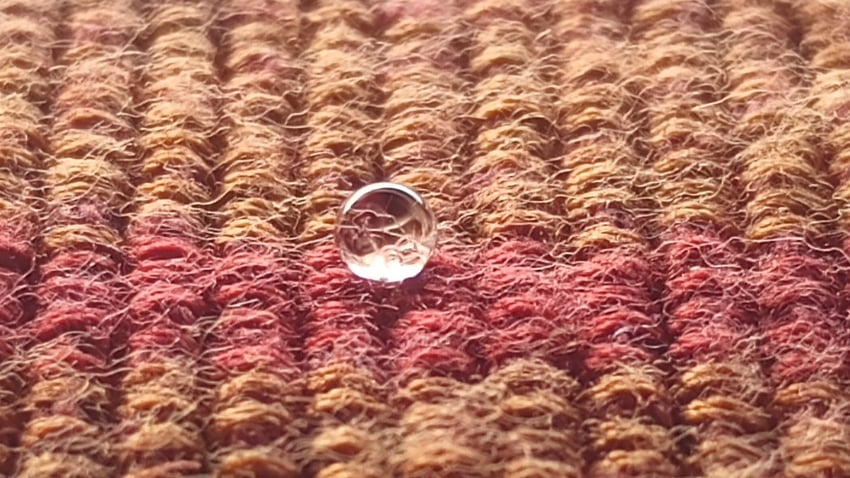
Three small, crystal-clear liquid drops were found on a coarsely woven tablecloth. The environment suggested no obvious source of water: there had been no rain, no roof leaks, and the tablecloth had been undisturbed since the previous evening. Notably, the drops exhibited a contact angle exceeding 90°, indicating a high surface tension liquid that resisted absorption by the fabric.
Investigation / Analysis:
Using classical chemical reasoning and sensory observation, a method historically employed by chemists, the liquid was identified as highly concentrated salt water. The likely source was residual coarse sea salt crystals left on the tablecloth from dinner.
Salt is a deliquescent material, meaning it can absorb moisture from humid air and form a concentrated aqueous solution. The unusually high contact angle was explained by the physics of salt water:
Insights:
This case demonstrates:
Conclusion:
A simple observation of three tiny water droplets became an illustrative example of surface tension, deliquescence, and the interconnectedness of chemical principles. Whether in the grandeur of mountain vistas or the microcosm of a tablecloth, science illuminates the beauty inherent in everyday life.

Discover how Brighton Science can help you understand and control surface interactions in your products. Contact us to explore solutions tailored to your materials and processes.