

Key Takeaways
This is the first post in a three-part series based on our webinar with Plasmatreat, Next-Generation Aerospace Surface Preparation. The series answers three questions:
-
- What surface prep methods are available for aerospace composite bonding? (this post)
- How do you verify that your prep worked? (Part 2)
- What contact angle should you target for good bonding? (Part 3)
Why surface prep is getting more attention
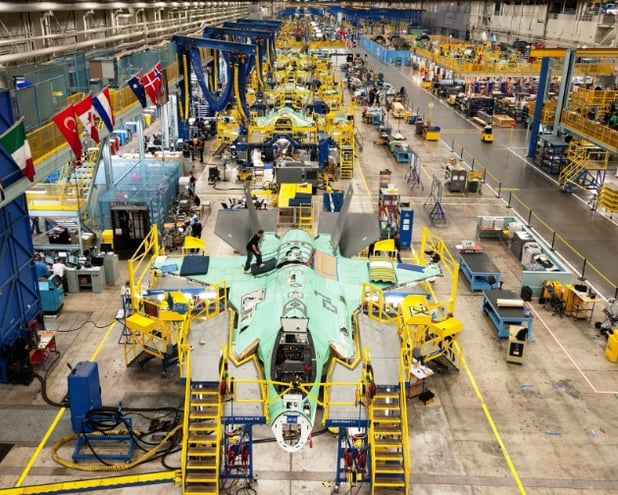
Aerospace and defense programs are scaling up fast:
- Commercial: Airbus is targeting 70 to 75 A320 Family aircraft a month by the end of 2027 and 12 A350s a month in 2028 (Leeham News). Boeing is pushing the 737 MAX from 42 toward 47 a month and the 787 to 10 a month (CompositesWorld).
- B-21 Raider: Northrop Grumman builds the B-21 under the Air Force's Long Range Strike Bomber program. On September 29, 2026, the Air Force and Northrop Grumman broke ground on a new B-21 final assembly line in Palmdale, adding about one million square feet to support a 25% increase in annual production capacity (Air & Space Forces Magazine).
- F-47 and F/A-XX: Boeing won the Air Force's F-47, its Next Generation Air Dominance (NGAD) fighter, in 2025, and on September 29, 2026, the Navy awarded Boeing a contract worth more than $20 billion to develop the F/A-XX, the Navy's NGAD carrier fighter (The Aviationist).
- Missiles: Lockheed Martin agreed in January 2026 to take THAAD interceptor production from 96 to 400 a year (Lockheed Martin).
At the same time, designers want lighter structures, which means more adhesive bonding and fewer fasteners. Bond quality depends on three inputs: the adhesive, how it's applied and cured, and the surface. Most plants control the first two closely. The surface is often the one that goes unmeasured, even though about 95% of the field adhesion failures Brighton Science has seen in 30 years of consulting came from the surface changing in a way nobody intended.
Manual methods: solvent wipe, sanding, and grit blasting
These methods can work, but they have known problems, the biggest of which is that they are manual. Human operators bring risk into the process. That risk can be controlled, but it's a reality of these processes.
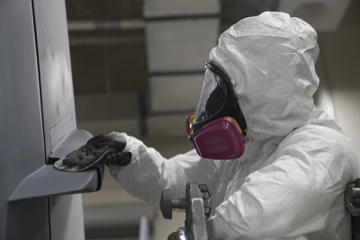
Figure 1: Manual surface prep is labor-intensive and often requires full protective equipment. Photo: U.S. Air Force, SrA Victoria Nuzzi, via DVIDS.
Other challenges:
- Labor scales with rate. Sanding and blasting take time on every part, so prep time grows right along with build rate.
- Results vary. Outcomes depend on the operator, the shift, and the condition of the abrasive.
- Environmental Contaminants. Dust from abrasion is a health concern for workers and can settle back onto the surface that was just cleaned. The environments where these surfaces are created are not always the most controlled.
Another issue that isn't as well understood: many people abrade surfaces to increase roughness, but roughness isn't what makes a bond work. "The idea that you need roughness for good bonding is really a misnomer," Lucas Dillingham, Brighton Science's Global Applications Director, said in the webinar. Roughness can help as a secondary effect, but bonding depends on surface chemistry, specifically how many reactive sites are available in roughly the top 200 molecular layers.
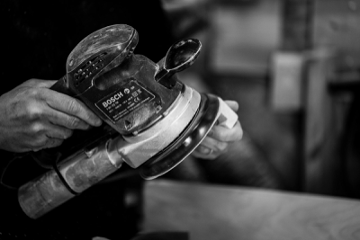
Figure 2: Sanding changes how rough a surface is, but roughness is not the main driver of adhesion. Photo: Adi Goldstein on Unsplash.
Peel Ply
Peel ply works well when it's controlled. Pulling the ply fractures the top layer of resin and exposes a fresh surface that's ready to bond.
The challenge comes when too much time passes between removing the peel ply and bonding. Surfaces change over time (more on that in Part 2), and a part that has waited past its window may need to be prepped again. Ply condition and consistent ply materials matter too.

Atmospheric Plasma Treatment
Atmospheric plasma, such as Plasmatreat's Openair-Plasma, is an automated, robot-mounted process. In one pass it:
- Removes organic contamination like mold release, waxes, and handling oils
- Adds oxygen-containing chemical groups that give adhesives more to bond to
- Runs without abrasives or dust
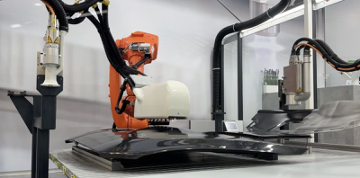
Figure 3: Openair-Plasma jets mounted on robots for automated surface treatment. Image: Plasmatreat GmbH
Two 2024 university studies compared plasma with other methods on carbon fiber composites
University of Washington (paint adhesion on CF-PEKK):
Treatment |
Water contact angle (degrees) |
Paint removed in tape test (%) |
| As received | 71.1 | 15.95 |
| Chemical | 36.0 | 1.18 |
| Flame | 15.8 | 0.56 |
| Plasma | 10.5 | 0.02 |

Figure 4: Left: water drops after each treatment. Right: paint remaining after the tape peel test. Source: Nandi et al., Applied Surface Science, 2024.
Ohio State University (structural bonds):
- Hand-sanded panels were over-sanded and failed inside the weakened laminate.
- Laser-treated joints failed at the interface between adhesive and part.
- Plasma-treated joints held the highest loads and failed within the adhesive itself, which means the surface prep held up.

Figure 5: Failure modes from the Ohio State study. Source: Al-Tamim, Gaur, Xu, and Anderson, December 2024.
In production, Collins Aerospace's site in Colomiers, France, replaced manual sanding of A350 nacelle components with Plasmatreat's atmospheric plasma after two years of testing, according to Le Journal de l'Aviation (June 2023).
The takeaway: control matters more than the method
Any of these processes can be effective and successful with the appropriate controls in place. The question for engineers scaling up isn't only which method to use. It's how you know, part after part, that the surface is ready.
That's the subject of Part 2: how to verify your surface prep.
Want the full discussion now? Watch the on-demand webinar