

This paper uses robotic water contact angle mapping to compare how different surface preparation techniques, solvent wiping, manual sanding, grit blasting, and plasma treatment, perform across composite and metal substrates, addressing common questions about consistency and reliability in manufacturing environments.
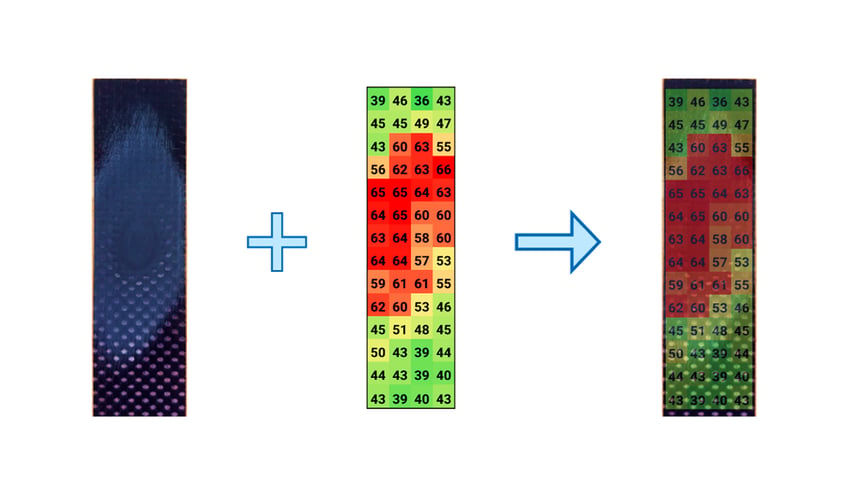
.png?width=256&height=331&name=Identifying%20Inconsistencies%20in%20Surfce%20Preparation%20(Cover).png) While manual techniques like sanding can look adequate to the eye, spatial water contact angle (WCA) mapping often tells a more complex story underneath. In other words, a surface can appear uniform while still hiding contamination, over-abrasion, or incomplete treatment that only becomes visible once it's measured point by point.
While manual techniques like sanding can look adequate to the eye, spatial water contact angle (WCA) mapping often tells a more complex story underneath. In other words, a surface can appear uniform while still hiding contamination, over-abrasion, or incomplete treatment that only becomes visible once it's measured point by point.
The findings show that manual preparation methods introduce significant heterogeneity, particularly on composites, where over-abrasion and residual contaminants can quietly undermine bond strength. Higher-control methods like atmospheric plasma treatment, by contrast, produce more homogeneous, stable surfaces, even up to 24 hours after treatment, making quantitative WCA mapping a practical, non-destructive way to catch these inconsistencies before they become bonding or coating failures.
Download the paper: Identifying Inconsistencies in Surface Preparation Through Robotic Water Contact Angle Mapping